



You should talk to your primary care provider about a referral to our balance therapy program for an assessment if you have:
- Fallen or been close to falling
- Changed your normal activities because you worry about your balance
- Experienced dizziness or unsteadiness
Our physical therapists treat balance and dizziness, working with other team members such as:
- Ear, nose and throat specialists (otolaryngologists and neurotologists)
- Neurologists
- Physiatrists
Balance therapy program
After your balance assessment, we will develop a plan with you. People often start with one or two therapy sessions weekly to work on strength, balance, and flexibility.
Image
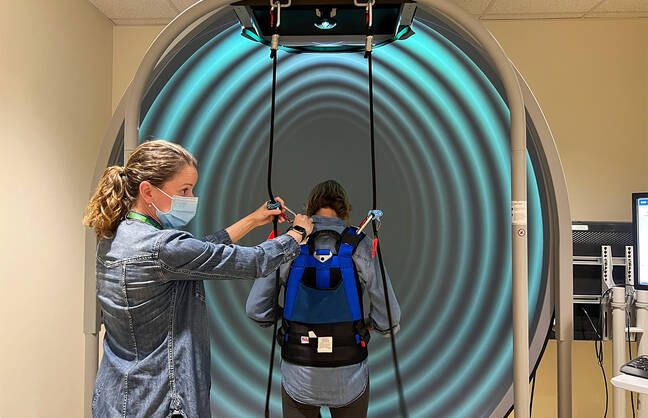
Our team uses the latest equipment available to evaluate and treat all the systems of balance, including:
- Bertec® Computerized Dynamic Posturography (CDP/IVR) system
- Biodex Reactive Step Trainer™
Can simulate slips and trips, all while you are safely protected in a harness system
After your assessment, we will determine the best treatment that may include:
- Balance exercises to improve steadiness with walking and standing activities
- Vestibular habituation and gaze stabilization exercises
This is to help retrain your vestibular system. This is the area of your brain responsible for balance. - Canalith repositioning maneuvers for BPPV (benign paroxysmal positional vertigo)
A technique that involves moving your head in specific directions to eliminate a spinning sensation when you move.
Resources
- Common causes of dizziness or vertigo (patient support and education)
- "A Case of Getting Dizzy" (article)
- Improving your balance to avoid falls (patient education)
- Home Safety Checklist (PDF) on the New Hampshire Falls Risk Reduction Task Force website